What if I told you that the reason you feel tired, overwhelmed, and mentally exhausted has nothing to do with how much you work — and everything to do with how much you own?
Minimalism is not about living with nothing. It is about living with only what truly matters.
You wake up in the morning and already your mind is full. A pile of clothes you never wear. A kitchen overflowing with things you have not touched in years. A to-do list that never ends. Before your day even begins — you are already carrying too much.
This is what minimalism helps you fix. Not just in your home. But in your mind. In your life. In your soul.
Nature already teaches us this beautiful truth. A tree does not hold onto dead leaves forever. It lets them go — so new ones can grow. A river does not collect everything it passes. It keeps moving, clear and free.
Today, let us talk about how you can do the same.
What Is Minimalism — Really?
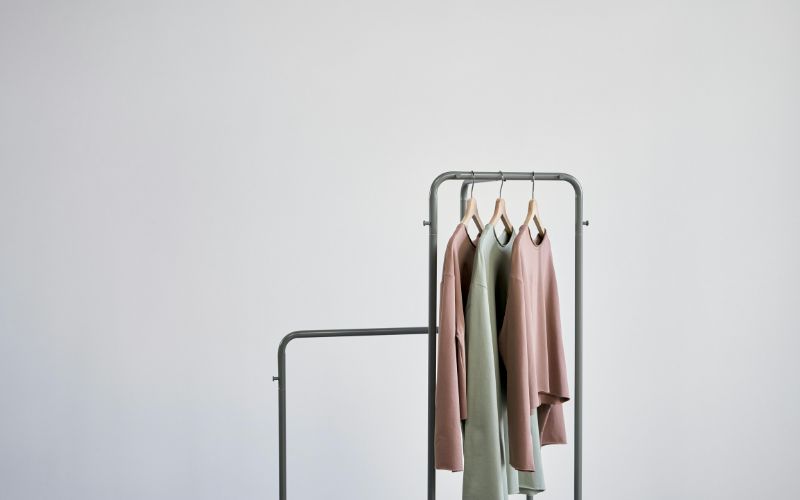
Minimalism is a simple idea: remove everything that does not add real value to your life — so the things that truly matter have space to breathe.
It is not about an empty house. It is not about giving away everything you love. It is about being intentional — choosing what stays in your life, rather than letting everything pile up by accident.
“Minimalism is about intentionally promoting the things we most value and removing anything that distracts us from it.”
— Joshua Becker, Becoming Minimalist
“The ability to simplify means to eliminate the unnecessary so that the necessary may speak.”
— Hans Hofmann
Think about it this way. Your attention is like sunlight. When you spread it across a hundred things — it warms nothing deeply. But when you focus it on a few things that truly matter — it can set them on fire.
Your Wardrobe Is Living Inside Your Head
If you want to build better habits in life, read this: The Power of Consistency
Here is something that will change the way you think forever.
Everything you own — every object, every piece of clothing, every forgotten item — takes up space in two places. First in your home. And then, quietly, in your mind.
💚 Humaira’s Real Story
Let me tell you something personal.
I had a wardrobe full of clothes. Packed so tightly I could barely close the door. But here is the truth — I only wore about twenty percent of what was in there. The rest just sat there. Month after month. Year after year.
And even though those clothes were inside the wardrobe — they were also inside my head. Every morning when I opened that door, I felt a heavy, invisible weight. A quiet stress I could not name. It felt like the clothes were not sitting in the cupboard. They were sitting on my shoulders.
Months passed. I kept telling myself I would clean it “someday.”
Then one day — I just opened the wardrobe and made a decision. Every dress I had not worn in the past year, I gave away. Every piece that belonged to a version of me that no longer existed — gone. Within one hour, my wardrobe was half empty.
And something extraordinary happened. I felt like I had removed a weight from my mind. Not just from the shelf — from inside my head. I felt lighter. Calmer. More free. It was such a small action. But it gave me such deep relief. That day I truly understood what minimalism means.
💡 The science behind this: Researchers at Princeton University found that physical clutter competes for your attention and increases stress hormones. Every object in your visual field sends a small signal to your brain saying — “deal with me.” Less clutter = less mental noise = more peace.
The More You Try to Do Everything, the More Problems You Create
The more I tried to do everything — manage everything, keep everything, handle everything — the more overwhelmed I became. More tasks. More stress. More mental clutter. More exhaustion.
Minimalism taught me that doing less — but doing it with full focus — is far more powerful than doing everything halfway.
“Our life is frittered away by detail… simplify, simplify.”
— Henry David Thoreau
“Owning less is better than organizing more.”
— Joshua Becker
Minimalism Gives You Mental Clarity
When you remove the unnecessary from your surroundings, something beautiful happens to your mind. The background noise disappears. The mental chatter quiets down. And suddenly — you can think clearly. You can focus. You can feel what you actually feel.
This is called mental clarity — and it is one of the greatest gifts minimalism gives you.
“Simplicity is the ultimate sophistication.”
— Leonardo da Vinci
“Have nothing in your house that you do not know to be useful or believe to be beautiful.”
— William Morris
✅ Practical Action Tips — Start Today
💚 Action 1 — The One-Year Rule
Pick up any object in your home. Ask yourself: “Have I used this in the last one year?” If the answer is no — it does not belong in your life. Give it away, donate it, or let it go.
💚 Action 2 — One Room at a Time
Do not try to declutter your entire house in one day. Choose ONE room. ONE shelf. ONE drawer. Finish it completely. Feel the satisfaction. Then move to the next.
💚 Action 3 — The “Love It or Need It” Test
Pick up any item and ask: Do I love it? Do I need it? If the answer to both is no — it goes. You are not being wasteful. You are being intentional.
💚 Action 4 — Stop Buying What You Don’t Need
Before buying anything new, wait 48 hours. Ask yourself: Will I still want this in one month? Most of the time, the answer will be no.
💚 Action 5 — Digital Minimalism Too
Delete apps you never use. Unsubscribe from useless emails. Remove notifications. A clean phone screen is a calmer mind. Start with just 5 deletions today.
🌿 Your 3-Day Minimalism Challenge
Do this challenge this week — one day at a time:
“Love people, use things. The opposite never works.”
— The Minimalists
❓ Frequently Asked Questions About Minimalism
🧠 Test Yourself — Minimalism Quiz
Click an option to see if you are right!
Q1: What is the best description of minimalism?
Q2: What does physical clutter do to your brain?
Q3: What is the “one-year rule”?
Q4: Who said “Simplicity is the ultimate sophistication”?
Q5: What is digital minimalism?
The Final Word
You do not need more. You need less — but better.
Less noise. Less clutter. Less weight. So that what remains — your relationships, your health, your dreams, your peace — can finally have the space they deserve.
Minimalism is not a trend. It is a decision to stop letting things own you — and to start owning your life instead.
Start today. Open one drawer. Clear one shelf. Give away one bag of clothes.
You will not just feel a lighter home. You will feel a lighter mind.
“The first step in crafting the life you want is to get rid of everything you don’t.”
— Joshua Becker
💬 Your Turn
Which area of your home will you declutter first — wardrobe, shoes, or kitchen? Tell me in the comments below. Share this article with one person who needs peace in their life today. 🌿