Table of Contents
You know that feeling when life is not where you thought it would be by now? The job you wanted, the money you planned for, the version of yourself you imagined years ago? And instead of doing anything about it, your mind just keeps replaying one question: why is it like this?
That loop is exhausting. And here is the quiet truth nobody says enough: you cannot move forward from a place you have not yet accepted. When you learn to accept yourself and move forward at the same time, everything shifts. Your mind stops fighting itself, and it starts building instead.
This article gives you the exact steps to do both, grounded in psychology, real examples, and practical tools you can use today.
What It Really Means to Accept Yourself and Move Forward
Most people confuse self-acceptance with giving up. They think: if I accept that I am broke, I am saying being broke is fine. If I accept that I am lazy, I am saying I will stay that way. That is not what acceptance means.
Self-acceptance is the honest acknowledgment of where you are right now, without adding shame to it. It is saying: this is my reality today, and my mind is free to work on what comes next.
Your brain can only focus on one task at a time. When you refuse to accept your situation, your mind is fully occupied by the question “why is this happening to me?” That question loops. It consumes attention. It generates no solutions. But the moment you accept the reality, your mind shifts from that question to a new one: “what do I do now?” And that question produces answers.
Think of someone who is unemployed. They spend three weeks telling themselves this should not be happening, feeling paralyzed, scrolling in shame. The moment they say “I am unemployed, I accept this, and today I will apply to two places,” the energy shifts. Same situation. Different relationship to it.
The Science Behind Self-Acceptance and Progress
Research from Dr. Kristin Neff’s Self-Compassion Lab at the University of Texas shows that people who practice self-compassion, which is the psychological sibling of self-acceptance, are more motivated to improve, not less. They bounce back faster from failure. They take more initiative. They feel less stuck.
A 2016 study published in the journal Personality and Individual Differences found that self-acceptance is one of the strongest predictors of life satisfaction, yet it is one of the habits people practice least.
The reason is simple: the brain treats self-criticism as a safety behavior. It feels productive. “If I beat myself up enough, I will change.” But the data says otherwise. Self-criticism activates the threat response in the brain, which narrows your thinking. Self-acceptance activates the growth response, which opens it.
When you accept yourself and move forward with intention, you are not being soft. You are being strategic.
Self-Acceptance vs. Self-Criticism: Effect on Forward Progress
Based on findings from Dr. Kristin Neff’s self-compassion research and related studies in positive psychology. Illustrative values.
7 Steps to Accept Yourself and Move Forward Today
These steps are not affirmations you repeat until you believe them. They are actual practices that shift how your mind operates day by day.

Name Your Reality Out Loud
The first move is the hardest. Say the thing you keep avoiding. “I am stuck.” “I am not where I want to be financially.” “I have been in my comfort zone for months.” Naming it is not surrender. It is the starting line. Your mind cannot solve a problem it is still pretending does not exist. This is the first real step to accept yourself and move forward.
Separate the Situation from Your Worth
Being unemployed does not make you less capable. Being in debt does not make you less intelligent. Being in a rut does not mean you are weak. Your current situation is a chapter, not your character. Write this on paper if you need to: “My situation is temporary. My worth is not.”
This distinction is what stopping negative self-talk actually requires at its root.
Give Your Mind One New Question
Swap “why is this happening to me?” with “what is one small thing I can do today?” Your brain works on whatever question you give it. One question closes doors. The other opens them. This is not toxic positivity. It is practical neuroscience. The mind focused on a solution generates solutions.
Start for Just One Minute
If you are in your comfort zone and you know it, accept that fact first. Then commit to one minute of the thing you have been avoiding. Just one. Write one sentence. Send one email. Do one push-up. The minute is not the goal. Breaking the freeze is. You can build from one minute to one hour over weeks.
This is the exact logic behind micro habits for beginners, one of the most effective tools for people restarting after a long pause.
Stop Waiting to Feel Ready
Readiness is a feeling that arrives after you start, not before. Every person who built something meaningful started before they felt prepared. Acceptance includes accepting that you will act while uncertain, while scared, while imperfect. That is the deal. That is how it works for everyone.
Build a Daily Anchor Habit
One small habit done daily builds identity faster than anything else. A five-minute walk. A journal entry. Ten minutes of reading. Pick one thing and do it every day for 21 days. This habit tells your brain: I am someone who follows through. And that identity is what carries you through hard days. For deeper strategy here, read how to build a habit that lasts forever.
Accept That Progress Is Quiet
Real growth does not feel dramatic. On the day you go from 0 to 1 percent better, nothing feels different. That is why most people quit. They accept themselves but then expect cinematic change. Accept the slow. Trust the daily. The compound effect of small, consistent actions is not a motivational idea. It is mathematics.

You are exactly where you need to be right now. Acceptance is not the end of your ambition. It is where your ambition finally gets room to breathe.
Real-Life Examples and a Simple Template
Here is what this actually looks like in practice, not theory.
Rayan’s Story: One Small Step at a Time
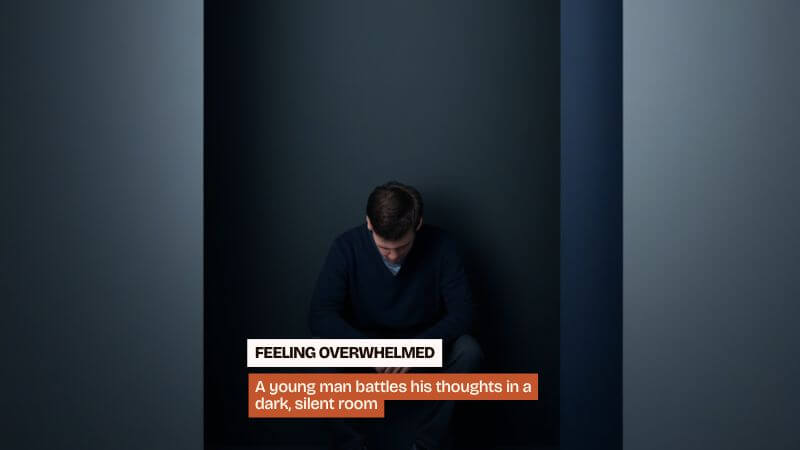
Rayan was 27 years old. Six months without a job. Six months of waking up every morning with the same first thought: “I have no job. I have no job. I have no job.”
He did not say it out loud. But his mind said it all day, every day, like a radio stuck on one channel with no off switch.
He stopped picking up phone calls. Stopped replying to messages. Told his mother he was “working on things” when really he was lying on his bed staring at the ceiling, too heavy to move. The job listings were open on his laptop. They had been open for weeks. He never applied.
He felt stuck. Not just unemployed. Genuinely stuck, like his feet were in concrete and the world was moving around him without him.
Step 1: He named it. One night, around 11pm, he picked up an old notebook from under his bed. He wrote one sentence: “I have no job right now. This is where I am. And I am going to stop pretending it is not real.” It felt small. It also felt true. And that was the first honest moment he had in six months.
Step 2: He asked one new question. The next morning the thought “I have no job” came again. But right after it, a new question appeared: “What is one thing I can do today?” He opened his laptop and updated just his name, email, and phone number at the top of his CV. Three fields. Two minutes. Done. Then he closed the laptop and made tea.
Step 3: He did two lines. The next day he rewrote two lines under his last job. Just two lines, eleven minutes. Then he stopped, closed the laptop, and went for a short walk outside. The first time in weeks he had left the house without a reason.

Step 4: He found one real job listing. Not ten. One. He read it carefully, wrote three sentences of a cover letter, saved the document, and went to sleep. Three sentences toward one real opportunity.
Step 5: He sent the imperfect thing. Day five he finished the cover letter in twenty minutes. He read it twice. His hand hovered over the send button. He pressed it anyway.
Step 6: He built a tiny routine. By end of week two he had a simple daily plan. Wake up. Tea. Thirty minutes of one job task. Ten-minute walk. Done. No guilt after that. No pressure. Just those two things, every day.

Step 7: He added one thing for himself. Week three he also started reading fifteen minutes before bed. Nothing career-related. Just a book he had been meaning to read for two years. It helped his mind slow down at night.
Step 8: He prepared steadily. Week six brought the first interview email. He prepared for four days, forty minutes each evening, writing answers in the same notebook where he had written that first honest sentence.

Step 9: He let someone in. That night he sat with his mother at dinner and told her the truth about the past ten weeks. She reached across the table and held his hand without saying anything.

Later Rayan told a friend: “I thought acceptance meant giving up. The moment I stopped fighting the fact that I had no job, my brain finally had space to figure out what to do about it. Every step felt tiny. But every step was real.”
He still has that notebook. The first sentence is still there, a little faded now: “I have no job right now. This is where I am. And I am going to stop pretending it is not real.” Everything that came after started there.
Example 2: Fatima had been putting off her online business idea for eight months. She kept saying she was lazy. When she stopped fighting the label and just accepted “I have been inactive, now I will work for ten minutes today,” she published her first post the same day.
Simple Template to Accept Yourself and Move Forward:
| Step | What You Do | Time Needed |
|---|---|---|
| Name It | Write one sentence about your real situation | 2 minutes |
| Separate Worth | Write: “This situation is not who I am.” | 1 minute |
| One Question | Ask: “What is one thing I can do today?” | 2 minutes |
| One Minute | Do that thing for exactly one minute | 1 minute |
| Track It | Mark a small win in your journal | 1 minute |

5 Common Mistakes When Trying to Accept Yourself and Move Forward
- Treating acceptance as passivity. Acceptance is not “I give up.” It is “I am clear-eyed about today, and I act anyway.” The two go together, not against each other.
- Waiting until you feel better to start. The action creates the feeling, not the other way. You take the step, then the momentum follows. Waiting for motivation is how months disappear.
- Comparing your Chapter 2 to someone else’s Chapter 20. Every person you see succeeding online has years of invisible work behind that moment. You are comparing their highlight reel to your daily reality. That comparison always lies.
- Making the goal too large too fast. You accept yourself, feel good, and then set a goal so large it collapses you within a week. Start smaller than you think is necessary. Expand from success, not from pressure.
- Confusing self-acceptance with no ambition. Accepting where you are does not mean staying there. It means you stop wasting energy on shame and redirect it to forward movement. You can accept yourself and still want more. Those two things belong together.

Your 3 Actions for Today
- Write one sentence: Describe your real situation right now, without judgment. Just facts. “I am at this point. I accept it.”
- Do one minute: Pick the task you have been avoiding and do it for exactly 60 seconds. Set a timer. Start. That is the whole instruction.
- End the day with one small win: Write down one thing you did today, no matter how small. A text sent. A page read. A breath taken intentionally. Train your brain to see forward movement, not just the gap.
Frequently Asked Questions About How to Accept Yourself and Move Forward
Does accepting yourself mean I have to be okay with staying where I am?
No. Acceptance means you stop adding shame and resistance to your current reality. You can fully accept where you are today and still want something completely different tomorrow. The two are not in conflict. Acceptance is the starting point of real change, not an endpoint.
How long does it take to learn to accept yourself?
There is no fixed timeline. For most people, it is a practice, not a destination. Small daily moments of self-acknowledgment build over weeks and months into a genuinely different relationship with yourself. The consistent daily habit matters far more than any single breakthrough moment.
What if I feel lazy and cannot start even small tasks?
Accept the laziness first. Say “I am in a low-energy period, and that is okay.” Then pick the smallest possible action you can take: one sentence, one minute, one step outside. You do not need to overcome laziness to start. You just need to start before the laziness gets a vote.
Can self-acceptance help with anxiety and overthinking?
Yes, significantly. Much of anxiety and overthinking is driven by the gap between where you are and where you think you should be. When you accept the present reality without judgment, that gap closes, and the brain has less to spiral about. Research from the American Psychological Association confirms that acceptance-based approaches reduce anxiety and increase wellbeing.
What is the difference between self-acceptance and low standards?
Self-acceptance is about your relationship with yourself, not your expectations for your life. You can hold very high standards for what you want to build while still being kind and accepting toward yourself in the process. High standards plus self-compassion produce more results than high standards plus self-punishment.
How do I accept myself when people around me keep pointing out my flaws?
Other people’s opinions of you are filtered through their own fears and experiences. Their assessment is not objective data. You are allowed to hear feedback, take what is useful, and leave the rest. Building a private daily practice, like journaling or reading, creates a space that belongs to you alone, separate from outside noise.

If this article helped you, the next step is building the daily habits that make acceptance feel natural. Read Micro Habits for Beginners next, or explore How to Stop Negative Self-Talk to go deeper on the mindset side.